L’Avocate du Diable

By EU Accession Negotiations

During the panel organized by the Institut du Bosphore which took place last year. I said the following. I was pessimist but tried to be optimist . I wonder what I’ll say this year on their 8.th congress.

“Etre l’avocate du diable n’est pas chose facile surtout lorsque l’on est en face d’un diable à multiples têtes,  chaque tête se contredisant, cachant leurs intentions réelles, chacune semblant jouer un jeu dont on ne sait vraiment ce qui en résultera, voulant faire a sa tête alors qu’elles sont toutes reliées au même corps, à ce monde qui est a nous tous.

Les questions que je me pose et auxquels j’aimerai trouver des réponses satisfaisantes sont comme suit:

Ou en est L’UE en cette année qui s’annonce bien difficile avec une économie défaillante, des chômages accentués par une crise des refugiés, des migrants, possibilité d’un Brexit, des montées ultranationalistes, et une Commission qui se voit comme la dernière chance pour une Union unifiée.

Les membres de l’UE ne sont pas seulement sous le poids d’une crise domestique ou interne mais sous le poids d’une crise régionale et mondiale. N’arrivant pas trouver des solutions rapides a ces crises elle semble se fractionner Les tenants du retour a la nation augmentent. Je n en dirait pas plus long. Le sujet vient d’être traité.

Ce qui me fait arriver a posé ma deuxième question.

Est t’on aujourd’hui en face de ce que l’on pourrait décrire comme des contreparties logiques entre l’UE et la Turquie, ou doit on parler d’un marchandage aberrant comme le décrit avec presque les même termes le premier ministre Turc M. Davutoğlu et  les membres des partis d’oppositions des pays membres de l’UE.

L’UE se voit affaiblie et divisée et croit voire en face d’elle une Turquie en position de force ce qui est loin de refléter la vérité car elle aussi est divisée, isolée de ces alliés, affaiblie par ce qui se passe a l’Est du pays, le long de ces frontières, et concernées par une économie qui ralentit et causera une hausse du sous-emploi, faillite des petites entreprises et autres…

Lorsque l’on regarde ce qui est dit du projet d’accord conclu le 7 Mars dont les détails ont du être  affinés hier et aujourd’hui on voit que  l’UE conçoit ce qui est fait et se fera  comme des concessions, des concessions importantes  alors  que la Turquie voit ceci  comme ce qui lui est du, comme une accélération de son processus d’adhésion a l’UE chose qui aurait du se faire automatiquement mais qui aujourd’hui se fait en échange de son engagement à bloquer l’afflux de migrants et refugiés en Europe, a reprendre ce qui sont a leurs portes. Cela aboutit à la réponse suivante: C’est un marchandage qui est entrain d’être conclut mais je garde quand même l’espoir que cela pourrait aboutir à des conclusions  pouvant  doper les relations entre la Turquie et l’UE dans les années à venir.

Mais quels sont les véritables pensées des deux parties concernées au sujet de l’adhésion de la Turquie  à l’Union Européenne. 

La Turquie veut elle vraiment faire part de cette Union, veut elle vraiment être “Européenne”? Lorsque on la regarde on voit plus d’une Turquie. Une qui pense  qu’une démocratie musulmane  basé sur le modèle de la démocratie chrétienne pourrait se faire grâce à un ancrage démocratique guidée par l’UE mais qu’elle voit aujourd’hui en dérive. Une autre qui se moyen-orientalise de plus en plus pour des raisons diverses mais qui a été aussi influencé par le refus d’une candidature basé sur des critères qui ne sont d’ailleurs pas toujours remplit complètement même par les membres de l’UE. A ce moyen-orientalisation s’ajoute une dérive autoritaire et une fermeture politique du pouvoir politique. La lutte contre le terrorisme en montée dans le pays semble avoir donné a l’Etat carte blanche pour faire ce qu’il entend. On essaye de façonner le système judiciaire afin d’assujettir le judiciaire à l’exécutif, façonner aussi le système universitaire qui est un des derniers piliers à rester un lieu de libre parole. façonner toute la Turquie lui donnant ainsi un caractère plus moyen oriental qu’il ne l’était auparavant. S’éloigne t’on d’une démocratie pluraliste, ou dérivons nous vers un régime guidé par une majorité a caractère néo féodal les jours à venir nous le dirons plus précisément

Et que fait l’UE face à ces développements dans ce pays candidat à l’UE? S’accommode-t-elle à ce développement pour que le jeu du commerce puisse continuer? N’est ce pas d’ailleurs la raison pour laquelle la plupart des chapitres ouverts ne concernent en grande partie que les sujets économiques, comme le dernier chapitre ouvert, le chapitre 17 qui est consacré à la Politique Economique et Monétaire portant ainsi à 15 le nombre de chapitres ouvert sur les 35 existants. Comment expliquer pourquoi l’ouverture des chapitres 23 sur la réforme judiciaire et les droits fondamentaux et 24 sur la justice, la liberté et la sécurité n’ont pas fait partie des priorités  absolues au cours des négociations menées entre la Turquie et l’UE? N’est ce pas ces mêmes deux chapitres qui ont toujours fait partie des priorités absolues au cours des négociations menées avec d’autres candidats. Pourquoi ne pas énoncer à chaque fois les principes de Copenhague pour pouvoir adhérer a l’UE, le respect de droit et des droits fondamentaux dont la liberté de réunion et d’expression? La Turquie aurait été bien différente si cette duplicité dans nos relations n’avait pas existé. Ce qui me force a posé une question à laquelle je ne répondrai pas. Je vous laisse décider. La veut on vraiment démocratique?

Il me semble que l’UE semble mener les discussions avec la Turquie non pas comme si elle était un pays candidat a l’UE mais plutôt comme un pays tiers avec lequel on mène des négociations sur des sujets économiques qui tiennent au cœur des membres. D’ailleurs lorsque l’on examine le nouveau programme de 18 mois du Conseil le nom de la Turquie n’est cité que deux fois: une fois sur la possibilité de moderniser l’Union Douanière avec la Turquie et une seconde fois sur  le plan d’action sur la migration avec la Turquie. On ne parle ni de sa candidature, ni de son accession a l’UE, ni de l’ouverture de nouveaux chapitres.

Les pays membres de l’UE veulent elle vraiment une Turquie membre de l UE. Il me semble que la réponse aujourd’hui semble être tout simplement non. Cela n’est pas pour aujourd’hui ou demain. Est ce que la Turquie fait ce qu’elle a à faire pour devenir vraiment membre de l’UE? La réponse est la même : Non pas aujourd’hui, mais peut être demain.

J’aimerai terminer sur un ton plus optimiste. L’UE peut être imparfaite et on comprend très bien les critiques faites soit par la droite soit par  la gauche. Mais il  nous faut nous souvenir que les problèmes que nous faisons face sont plus régional, global que national. Sous les conditions actuelles, penser qu’un Etat omnipuissant pourrait trouver une solution a tout nos problèmes serait d’un irréalisme immense. Ce que vous avez de meilleur en ce moment est l’UE, gardez la intacte.

Et pour ce qui est de la Turquie, les statistiques démontrent qu’un plus grand nombre de la population Turque qu’elle soit de la droite ou non est pour une UE   Notre candidature et notre adhésion a l’Union ne devrait pas etre oubliee. Faites que les nouveaux chapitres qui seront ouverts si ce deal que certains voit comme immoral est conclu soient les chapitres 23 et 24. Finissons en de cette duplicite( ikili oyundan)

Je suis consciente que ce je viens de dire n’est pas tres satisfaisant, que ce sont des  wishful thinking, des exhortations à conserver de l’espoir. Ma presentation fait la part trop belle au constat negatif et pas assez au positif. In fine c’est un texte pessimiste et c’est probablement ce que ressent l’ensemble des participants que nous avons ici. Mais qu’y puis je?

Aurais je du tout changer.. Bien sur que non car c’est ma  perception et elle est aussi valable que d’autres. Il n’empeche que la tonalité de ce que j ai dit  est ce qu’elle est. In fine les optimistes restent confinés a une vision trop idyllique pour etre reelle. Mais le monde a besoin d’une dose d’irreel . Les montagnes ne sont jamais deplacées par le realisme et la notion du possible mais par le reve et la disruption des idées communement admises. Je n en ai pas encore entendue une ….”

Turkey EU relations in the short, medium and long term

By EU Enlargement Policy

Mutual distrust and interdependency, mix of conflict and cooperation are terms which have characterized  Turkey’s  relations with the Eu  for decades.

I have now been asked to look into my  crystal ball and talk about possible scenarios for Turkey in respect to its accession to the EU. Modelling scenarios can only rest on assumptions, on determining a time period for which the analysis will be valid.  These scenarios  need also be concomitant to those valid for the EU but one must also be reminded that scenario building  in a context of flux and uncertainty is not easy.

  1. I. Let us start with the short run, that is for this year and the coming year.  When we look at Turkey and try to describe what characterizes policies conducted three terms come to mind  mind:

Reshaping:  reshaping  the army, the judiciary system, the bureaucracy, the media, the NGO s  and now the educational system so that it will fit  the identity of the new Turkey that the present government wishes to build.

Boosting : to boost economic growth the government has made appeal to financial measure as yet never used. The government has expanded a credit guarantee fund guaranteeing loans banks write to businesses. This has been followed by large private credit expansion at the same time as the government continues its huge infrastructure projects, building roads, hospitals, subways and high-speed rail. Shot of steroids will continue with the use of the wealth fund when the effects of the credit guarantee fund will have worn out.

Shifting: Shifting of axis in foreign policy. Turkish foreign policy to-day  displays a fundamentally different pattern compared to previous governments. Shifting of axis is followed by what I would also call having now a loose anchor, having an erratic compass . We now drift away from the West, but at the same times messages sent are that we will not pull the  plug out. We focus ourselves to our  Muslim Middle Eastern neighbors but alienate ourselves from them by interfering in their domesitc affairs , talk of our belonging to the BRIC (Brazil, India, Russia, and China) countries , discuss becoming members of the Shanghai group. Drifting  back and forth in our narrative is never constructive. Foreign policy in Turkey is concentrated mostly on Syria, the PKK the Ydp and ISIS and keeping our borders safe.

When we look at the present state of the EU we see that the impact of the rise of nationalism, xenophobia and racism has caused a shift in member countries public opinion towards further enlargement.The geopolitical situation in the Middle East and North Africa which is driving millions of people from their homes causing millions to be displaced, seeking asylum causes fears and ends up with talks about border closure. Turkey is being viewed as a buffer zone between a supposedly peaceful EU and a crise ridden Middle East. The EU is also faced with  successive internal crises, crises  which started long ago such as the  rejection of the constitution, the eurozone crisis, the possibility of Grexit, the refugee crise, Brexit and rise of illiberal democratic tendencies  in some member countries  which causes fatigue and unwillingness in dealing with others desires

Under these circumstances  that is in the short run there can only be  growing enstrangement in the relations between the Eu and Turkey.  Enlargement can only be shelved. Members such as Portugal, Spain,  and Italy who were supporters of Turkey  are now mostly concerned about  recovering from the economic crise, the UK who was a fervent supporter of Turkey has during their referendum campaign  done a permanent volte face, northern member states Sweeden, Finland who had also supported Turkey now view negatively the democratic backsliding of Turkey . The new alliance built with Russia causes fear in the Balkans. The result is a strengthening of the  anti Turkey constituency.

In the short run I see no chance of any new dialogue between the EU and Turkey but I also think it unlikely that the EU will suspend the accession process….except if there is a reinstatement of the death penalty…

  1. II: What about the  medium term that is from 2019 to 2023

All will depend on the form the EU will have, on how the Brexit deal will have taken shape, on the turn  domestic and foreign policy in Turkey will have taken and how public opinion both in the Eu and in Turkey will view impending relations. If scepticism and opposition towards Turkey’s EU accession is still strong, there will be little chance for full accession. If in Turkey concerns over national sovereignty, fear of loss of moral values, discrimination on religious grounds and fear of territorial partition continues to be the main drivers of euroscepticism in Turkey, dialogue will be at a stand still.

If no full membership is in the agenda the  alternative could be what the Germans called a priviledged parnership,or  a form of associate membership In the political arena, no longer anchored to the EU, Turkey will be left to do what it wants. Depending on who would have won the elections in 2019 Turkey will have either moved to a full presidential system or a move back to a more democratic form of government which then would allow for new dialogues. Ties on the economic front will be strong , the customs union agreement will be renewed and modernized , Turkey would continue to be a strategic country for the EU for security and energy route reasons.

This medium term scenario would lead Turkey to move even more away from Europe. A divorce is more than painful whatever the settlement.

  1. III. As to the  long term, that is 25 to 50 years from now, what can I say. Most probably most of us who are here present  will not be there to see it….

Sharing Europe Press release

By News

On 24 and 25 May, the European Movement International celebrated its 70thanniversary in The Hague with the two-day event ‘Sharing Europe’. Citizens, policy-makers, trade unions, civil society and business came together to discuss the main issues facing Europe today, including: sustainability, migration, security, labour rights, new economic models and democracy over two days of panel debates and agora sessions.

The second day of celebrations took place in the Ridderzaal in the Dutch Parliament, where the 1948 Congress of The Hague was held, which laid the groundwork for the establishment of the European Movement and the foundations of the European Union itself.
During her keynote speech, European Movement International President Eva Maydell MEP stated:

“Now more than ever we need to stand up for what we hold dear, we need to speak up for what we consider to be true, we need to come forward and be the change we want to see in the world around us. If this gathering is to do anything, it must be to remind us that Europe is not just institutions or nations, politicians or politics. It is each and every one of us, citizens of Europe.” 

Minister of the Interior and Deputy Prime Minister of The Netherlands, Ms. Kajsa Ollongren also told the audience:

“The ambition demonstrated by that congress [Congress of The Hague 1948] is still highly relevant. We too must now dare to look ahead. To the Europe of our children and our grandchildren. We need to decide what kind of Europe we want them to live in. And with that vision of Europe before us, we should take concrete steps to make it a reality.”

The two days also served as a discussion arena for the Declaration of The Hague, written and released by the European Movement and partners.
Based on the discussions and debates among citizens and stakeholders, in the Declaration, we are calling for:

  • a European democracy that encourages the full participation of all citizens and boosts transparency of decision-making, supported by increased investment in education
  • safeguarding our open societies, defending the rule of law and strengthening the judiciary and free press
  • a deeper economic and monetary union, based on an inclusive and fair economy, more ambitious when harnessing technology, focused on sustainable investments
  • a social model that address widening inequalities, prioritises investment in education, culture, R&D and skills for the jobs of the future
  • the promotion of European heritage and identity, while building on our cultural diversity
  • strong efforts in a transition towards sustainable renewable energy, decarbonisation and the circular economy, reversing biodiversity loss, combating air and water pollution, eliminating toxic chemicals and promoting sustainable agriculture
  • a more holistic approach to migration, addressing its root causes, offering protection to those in need and pursuing the social, cultural and economic inclusion of refugees and migrants in Europe in order to seize the opportunity of the diversity brought by these new Europeans
  • a joint response to current geopolitical challenges, in particular when addressing difficulties with Russia and the rise of extremism and terrorism
  • a common European defence policy and closer security cooperation, supported by a close partnership with the EU’s immediate neighbourhood.
  • a steady involvement and implication of the candidate countries and the countries in the Eastern partnership with whom we will share a common future
  • the full participation of women and young people to ensure that no one is discriminated against, both in the economy and in society as a whole

The full Declaration of The Hague is available here.

The speeches given in the Ridderzaal and a recording of the event can be found on this page of our website.

—ENDS—

Notes to Editors:

The Declaration of the Hague was drafted by the European Movement International, our National Councils, our member organisations and the following Content Partner organisations:

  • CEEP (European Centre of Employers and Enterprises providing Public Services and Services of general interest)
  • CEMR (The Council of European Municipalities and Regions)
  • The College of Europe
  • GESAC (European Grouping of Societies of Authors and Composers)
  • EuroCommerce
  • Europa Nostra
  • EEB (The European Environmental Bureau)
  • The European Women’s Lobby
  • The European Youth Forum
  • ETUC (European Trade Union Confederation)
  • UEAPME (European Association of Craft, Small and Medium-Sized Enterprises)

About Sharing Europe
Every 10 years, the European Movement International and the City of The Hague host the commemoration of the famous Congress of the Hague, which lay the foundations for European integration and the foundation of the European Movement.

To mark the 70th anniversary of The Hague Congress we gathered together citizens movements from across Europe, stakeholders representing society at large, political parties, academia, business, trade unions, youth organisations, local government, environmental movements. We wanted to recreate the spirit of 1948, gather in a sense of optimism and purpose to discuss and debate the future direction Europe needs to take to meet the social, economic, environmental and geopolitical challenges of our time.

About the European Movement 
The European Movement is the largest pan-European network of pro-European organisations. It is present in over 30 countries and encompasses 36 international associations, bringing together European civil society, business, trade unions, NGOs, political parties, local authorities and academia. Founded nearly 70 years ago, we have continuously advocated in favour of European cooperation and integration, based on the principles of peace, democracy, liberty, solidarity, equality, justice, and respect for human rights and the rule of law.

Today the European Movement seeks to provide a platform to encourage and facilitate the active participation of citizens and stakeholders from a cross-section of sectors in the development of European solutions to our common challenges. We offer thought leadership on the issues that confront Europe; we seek to inform the debates on our Union’s future, involve citizens and stakeholders in the decisions that affect them and influence policy-makers in favour of an open, inclusive, transparent and united Europe

The Turkey -EU Association celebrated Europe Day

By News

PROGRAM: DIPLOMACY UNDER A FRIENDLY ROOF

Program :  Celebration of Europe Day  

May 9, 2018 (Divan Hotel, Elmadağ)

9:00-9:30  Breakfast and Registration at the Divan hotel

9:30-12:30 Morning Session

The event in the morning is organized as a “world café” event where 60 participants headed by moderators and discussants (names are below) will talk about issues also listed below. Each table will sit around 10 persons; they will rotate every 20 minutes so as to allow them to cover all 7 topics.

1st table: EU and Migration (Deniz Şenol Sert and Dimitrov Bogoya)

2nd table: Economic Relations (Dilara Akan, Çiğdem Nas and Emre Gönen)

3rd table: Fundamental rights, justice and freedoms (Erkut Emcioğlu and J.J. Jääskeläinen )

4th table:  Security issues (Pesco) (Ilter Turan and Burç Beşgül)

5th table: Gender related issues (Zeynep Alemdar, Imad Khillo and Miikka Keranen)

6th table: Enlargement and the Balkans (Gül Turan and Dimitrov Bogoya)

7th table: New visions for the EU (Haluk Tükel and Jean Marcou)

12:30-14:30 Lunch Our Guest speaker is Ümit Boyner (Mrs), (Boynergrup Board Member & Former President of Tusiad) who will be speaking on Gender Equality in Workplace

14:30-16:30

Opening speech: Bahadır Kaleağası (World, Europe, Turkey: History of the Near Future)

Panel:  Visionary Approaches for a Changing World

Fatih Ömür  (Vision and Mission of a Leading Airport Operator)

Emine Etili (Visionary Approach to Digital Experiences)

Charles Emir Richards (Becoming a Visionary Filmmaker)

Özge Samancı (Visionary Approach to Turkish Culinary Experiences)

Moderator: Gül Günver TURAN

16 :30 – 17 :00

Handing certificates and group photo

18:00- 21:30 Departure by Funicular from Taksim to Kabatas for a boat trip ( Kaptan Boran) and dinner on the Bosphorus


Democracy Alive

By Events

TURABDER will be participating to this event with a panel on Turkey and by organizing a coffee booth.

ABOUT THE EVENT
For three days, in April 2019, the European Movement International is inviting you to a celebration of European democracy. Within the context of the Alliance for Democracy, and in partnership with the European Parliament, we are gathering decision-makers, organised civil society, business, trade unions, influencers, activists and, most importantly, citizens to take part in the leading European democracy festival in view of the European elections.

Inspired by the Nordic tradition of democracy festivals, DEMOCRACY ALIVE aims to encourage civic engagement and increase interest in European democracy.

WHY NOW
It is a challenging time for European cohesion, which is why we need to come together to prove that European ideals can reach beyond the corridors of Brussels and are relevant to every single European in their day-to-day lives. In order to bridge the gap between us citizens and our representatives, and to reinforce trust and optimism in the European project, we want to create a space where citizens, stakeholders and our elected representatives can come together and engage in dialogue on important issues that matter; be it on the environment, opportunities for the young, employment, human rights and/or the rule of law. Together we can energise citizens across Europe and greatly increase voter turnout in the 2019 elections by promoting the European Parliament’s #ThisTimeImVoting campaign.

We envision DEMOCRACY ALIVE as an open space where citizens and stakeholders, irrespective of their backgrounds and representations, will be able to hold their own events, debates, discussions, gigs, book readings, song contests, ping pong tournaments, silent disco’s – you name it! We are essentially facilitating a space for thousands of people to participate and communicate their views on democracy and Europe.

We will create a non-partisan arena for you and your organisation to share your message and vision for Europe. A part of the official programme will be created and curated by the European Movement International and the other organisations of the Alliance for Democracy, but the majority of events and debates will be organised by participating organisations. Moreover, we envisage that the festival, including all of its events, will be free of charge, ticket-less, and not require registration.

THE LOCATION: TEXEL, THE NETHERLANDS
DEMOCRACY ALIVE will take place on the beautiful Dutch island of Texel. We have chosen this location due to its ability to take us away from the usual Brussels bubble and bring us together in a non-traditional setting. Easy to reach, the island has all the elements needed for a successful event, including substantial local experience with large events, a wide range of accommodation options, and a dedicated local community who is excited to welcome us all to their home.

Sustainability: Solutions for Ihe Future

By Events

Wednesday 6th of February

Registration local organizers

11:00-17:00

City tour

12:00-15:30

Training for Strategic Planning

16:00-17:30

Opening ceremony

19:00-

Thursday 7th of February

Breakfast/Registration

08:00-09:00

Opening plenary

09:00-09:45

Words of welcome by presenters

Words of welcome Presidents of AEGEE-Europe

Roll Call

Presentation of the Agenda – content

Presentation of the Agenda – drafting

Presentation of the Safeperson project

Presentation of the Agenda of the day

Announcements of Local organizers.

Opening Symposium

09:50-11:20

Your first taste of the Sustainable Development Goals

Sustainability in a Divided World: Balances and Imbalances

Speakers:

Marie-Claire Graf

Prof. Gul Gunver Turan

Facilitator:

Anne-Sophie Klein Gebbink

Coffee break/Registration

11:20-11:45

Parallel slots I

11:45-13:15

Climate Change, Water and Food Security with respect to SDGs

Speaker: Tugba Agacayak

What the h*alth are you doing to my environment?

Speaker: Anne-Sophie Klein Gebbink

The link between gender roles and food security

Speaker: Equal Rights Working Group

Lunch/Registration

13:15-14:15

Prelude – welcoming song

14:30-15:45

Civic Education

Equal Rights

Youth Development

European Citizenship

Air – Initiating a storm of thoughts

16:15-17:45

Civic Education

Equal Rights

Youth Development

European Citizenship

Dinner

17:45-19:00

Social Program

21:00-

FRIDAY 8th of February

Breakfast

08:00-09:00

Think Tank: how can we make our cities more sustainable?

09:00-10:30

Coffee break

10:30-10:45

Parallel slots II

10:45-12:15

Solutions for sustainability: how can you contribute and how do we choose?

Moderator: Prof. Gul Gunver Turan

Sustainability debating competition

Civic Education Working Group

Social entrepreneurship & sustainability

Youth Development Working Group

Lunch

12:15-13:15

Fair

13:30-14:45

Water – Creating pool of ideas

14:45-16:00

Civic Education

Equal Rights

Youth Development

European Citizenship

Coffee break

16:00-16:30

Fire – Exchanging sparks of feedback

16:30-17:45

Dinner

17:45-19:00

Saturday 9th of February

Breakfast

08:00-09:00

Earth – Planting the roots of the forest

09:00-10:15

Civic Education

Equal Rights

Youth Development

European Citizenship

Parallel Slots III

10:15-10:30

Discourse on EU-Turkey relations

Speaker: Laura Batalla Adam

Zero waste: what is it and how do we get there?

Speaker: Kadri Kalle

The role of the ocean in a zero-emission world

Speaker: Nicola Grasso

Lunch

12:00-13:00

Closing Symposium

13:15-15:00

Panel discussion: the opportunities and challenges of sustai­nable development

Speakers:

Kadri Kalle

Nicola Grasso

Dilek Aydin

Facilitator:

Anne-Sophie Klein Gebbink

Coffee break

15:00-15:30

Closing Plenary

15:00-18:15

This Time I am Voting Presentation

Presentation of the content reporting

Presentation of the objectives of the AA 2019-2020

Questions

Commendations

Dinner

18:30-19:00

European Night

21:00-

Sunday 10th of February

Wake up/breakfast

09:00-10:00

Departure

10:00

Sustainability: Solutions for the Future

By Events

Wednesday 6th of February

Registration local organizers

11:00-17:00

City tour

12:00-15:30

Training for Strategic Planning

16:00-17:30

Opening ceremony

19:00-

Thursday 7th of February

Breakfast/Registration

08:00-09:00

Opening plenary

09:00-09:45

Words of welcome by presenters

Words of welcome Presidents of AEGEE-Europe

Roll Call

Presentation of the Agenda – content

Presentation of the Agenda – drafting

Presentation of the Safeperson project

Presentation of the Agenda of the day

Announcements of Local organizers.

Opening Symposium

09:50-11:20

Your first taste of the Sustainable Development Goals

Sustainability in a Divided World: Balances and Imbalances

Speakers:

Marie-Claire Graf

Prof. Gul Gunver Turan

Facilitator:

Anne-Sophie Klein Gebbink

Coffee break/Registration

11:20-11:45

Parallel slots I

11:45-13:15

Climate Change, Water and Food Security with respect to SDGs

Speaker: Tugba Agacayak

What the h*alth are you doing to my environment?

Speaker: Anne-Sophie Klein Gebbink

The link between gender roles and food security

Speaker: Equal Rights Working Group

Lunch/Registration

13:15-14:15

Prelude – welcoming song

14:30-15:45

Civic Education

Equal Rights

Youth Development

European Citizenship

Air – Initiating a storm of thoughts

16:15-17:45

Civic Education

Equal Rights

Youth Development

European Citizenship

Dinner

17:45-19:00

Social Program

21:00-

FRIDAY 8th of February

Breakfast

08:00-09:00

Think Tank: how can we make our cities more sustainable?

09:00-10:30

Coffee break

10:30-10:45

Parallel slots II

10:45-12:15

Solutions for sustainability: how can you contribute and how do we choose?

Moderator: Prof. Gul Gunver Turan

Sustainability debating competition

Civic Education Working Group

Social entrepreneurship & sustainability

Youth Development Working Group

Lunch

12:15-13:15

Fair

13:30-14:45

Water – Creating pool of ideas

14:45-16:00

Civic Education

Equal Rights

Youth Development

European Citizenship

Coffee break

16:00-16:30

Fire – Exchanging sparks of feedback

16:30-17:45

Dinner

17:45-19:00

Saturday 9th of February

Breakfast

08:00-09:00

Earth – Planting the roots of the forest

09:00-10:15

Civic Education

Equal Rights

Youth Development

European Citizenship

Parallel Slots III

10:15-10:30

Discourse on EU-Turkey relations

Speaker: Laura Batalla Adam

Zero waste: what is it and how do we get there?

Speaker: Kadri Kalle

The role of the ocean in a zero-emission world

Speaker: Nicola Grasso

Lunch

12:00-13:00

Closing Symposium

13:15-15:00

Panel discussion: the opportunities and challenges of sustai­nable development

Speakers:

Kadri Kalle

Nicola Grasso

Dilek Aydin

Facilitator:

Anne-Sophie Klein Gebbink

Coffee break

15:00-15:30

Closing Plenary

15:00-18:15

This Time I am Voting Presentation

Presentation of the content reporting

Presentation of the objectives of the AA 2019-2020

Questions

Commendations

Dinner

18:30-19:00

European Night

21:00-

Sunday 10th of February

Wake up/breakfast

09:00-10:00

Departure

10:00


Romanian Presidency of the Council of the European Union

By News

Romania takes over the rotating presidency of the Council on 1 January, for the first time since joining the EU in 2007. Romanian MEPs told us what they are expecting.

For its six-month term, Romania has set out the following priorities:

  • .stimulate EU growth
  • .improve conditions for competiveness
  • .strengthen internal security
  • .promote European common values of democracy, freedom and respect for human dignity in the EU and beyond its borders
  • .focus on combating racism, xenophobia, antisemitism, intolerance and populism

During the Romanian Council presidency, the EU will also have to address:


Differing Visions for Turkey-EU Engagement

By EU Accession Negotiations

The Turkish Policy Quarterly (TPQ) organized a roundtable on Turkey-EU Relations which took  place on Tuesday, October 9th at the Netherlands Consulate at the Palais de Hollande. The topics of the panel moderated by TURABDER’s president included key issues on the agenda: visa exemption for Turkish citizens, updating the Customs Union, security cooperation, and maintaining a constructive dialogue on Turkey’s reform agenda. The program was as follows and the moderator’s opening speech

The Moderator, Gül Günver Turan’s  (President, Turkey-European Union Association) opening speech was as follows: 

We live in difficult times and this is true not only for Turkey, but also the EU.

Fretting about fragmentation within the EU with its north moving away from its south,

Discussing how Eastern member of the EU feel  left out, critizizing  their being considered as second class members by core members of the EU,

The isolation felt by applicant countries who have no hope for full membership until 2025 or maybe even at a later date,

Fears about outside powers such as China, Russia trying to penetrate even divide the EU

fill the EU agenda.

We hear leaders, pro european ngos say :   “We have to  fight for a more united Europe. We need to fight for an open and tolerant society”,

Our next European elections in 2019 are important and we have to vote for more unity and not divisions”.

We also hear about dangers facing democracy and this not only in emerging and developing countries but in developed ones too  .

We see across Europe  nationalist and far right parties having  made significant electoral gains, with some having taken office while others have become  the major opposition.

We see  centrist parties who to retain their power have seen themselves forced to adjust to the demands of extreme rightists.

Fear of globalisation, fear of dilution of national identity, having to live through  financial crises and facing migrant crises have exacerbated these tendencies.

And when a tempest of this size hits Europe the deluge reaches its neighbours in greater proportions, at greater speed . A different multiplier and accelerator enters the game.

The title of to-day’s panel is Differing views on Turkey EU engagement.

Will these views be differing or complementary was my first reaction to the title? We shall probably know more after the presentations.

I was also surprised by  the last part of the title “Turkey – EU engagement. Engagement? Should our relations just be labelled as an engagement. Have we accepted to be seen outside the accession process? Are we now going to talk only about Turkey- EU engagement on economic, and security issues which might  bring a common understanding on only  a small number of contentious issues?

Will our relations with the EU remain merely transactional? Will focusing only on narrowly defined issues such as migration and security benefit us all more or less?

All these questions to which I find no satisfactory answers and for which I yearn, long, crave to find answers.

I will not dwell any further I will leave the floor first  to Mr. Ayhan zeytinoğlu, Chairman of the Economic development Foundation  who will be discussing upgrading, modernizing  if ever possible  the customs union agreement. “Ayhan Zeytinoğlu has been the Chairman of the Economic Development Foundation (IKV) since 2015. He is also the Vice-President of the Union of Chambers and Commodity Exchanges of Turkey (TOBB) and the President of the Kocaeli Chamber of Industry since 2009. Additionally, he is a member of the General Council of the World Chambers Federation. Currently, he is writing his Ph.D. thesis on agricultural policy and Turkey’s integration to the EU at the Marmara University European Studies Institute. Ayhan Zeytinoğlu is also the General Director of Zeytinoğlu Feed & Pet Food  Inc., Vice-President of the Board of Directors of Autoport Terminal Operators, and General Coordinator of Zeytinoglu Maritime.Following his undergraduate education in London, Ayhan Zeytinoğlu graduated from the University of Indiana in 1980. He holds a master’s degree in International Finance from Butler University”

Our second speaker is  Dr. Zümrüt İmamoğlu who  will discuss another  hot and difficult topic: The potential implications of the Turkish economy’s volatility for bilateral relations with the EU  .  Hot because it affects the daily operations of firms and daily life of citizens, and difficult since the volatility has to be explained by the political volatility of the decision makers. “Dr. Zümrüt İmamoğlu has been serving as Chief Economist of TUSIAD since June 2015. Prior to TÜSİAD, she was a Research Associate at Bahçeşehir University Economic and Social Research Center (Betam). She has taught undergraduate and postgraduate courses at Bahçeşehir University and Kadir Has University. Her main areas of research are Macroeconomics and International Economics. Besides her academic work, she has contributed to policy notes and reports for both the private sector and public sector policy-makers. She has been a commentator at various media platforms such as BloombergHT and CNBC-e.Dr. Zümrüt İmamoğlu graduated from Istanbul Technical University in 2000 and received her master’s degree in Economics from Boğaziçi University in 2002. She completed her Ph.D. from Carnegie Mellon University in 2010.

Our third speaker is Dr. Metin Gürcan a researcher at the Istanbul, Policy center…….His topic  is “Security Cooperation dynamics between Turkey and the EU

“Dr. Metin Gürcan, joined the Turkish Special Forces in 2000 and served in Southeast of Turkey, Afghanistan, Kazakhstan, Kyrgyzstan, Kosovo, and northern Iraq as the team commander/military adviser/liaison officer until 2008. Between 2010 and 2014, Gürcan worked as an analyst officer in the Turkish General Staff. After resigning from the military in 2015. In 2014, Gürcan was a visiting research fellow at Changing Character of War (CCW) Program of Oxford University. He has been published extensively in Turkish and foreign academic journals such as Turkish Studies, Small Wars Journal, Dynamics of Asymmetric Conflict, Perceptions, and is the author of two books: The Gallipoli Campaign: The Turkish Perspective and What Went Wrong in Afghanistan? Understanding Counter-insurgency in Tribalized Rural Muslim Environments. Gürcan is a columnist for Washington-based Al-Monitor and a regular contributor of Turkish T24 News Agency. Dr. Metin Gürcan graduated from the Turkish War Academy in 1998 and obtained his master’s degree in Security Studies from the U.S. Naval Postgraduate School in 2010. He completed his Ph.D. at Bilkent University in 2016”Collaboration of the EU and Turkey on foreign policy issues, collaboration within Pesco and the  EU’s Common Security and Defence Policy (CSDP), are other dimensions of working-level engagement. If Turkey could be  viewed as an instrumental partner in foreign policy it might also slow down Turkey moving away from the West.

Our last speaker is Samuel Vesterbye

“Samuel Doveri Vesterbye is the Managing Director of the European Neighborhood Council (ENC) with a specialty in Turkey and the Middle East. He oversees ENC research projects and events, including Academic Council Members and regional research coordination. He has worked with EU projects related to foreign affairs and research on Turkey since 2012 through partnerships and cooperation with the European Parliament, business associations, the European External Action Service and various international think tanks. Previously, he was a journalist in Turkey and Belgium covering Foreign Affairs, Energy and the Middle East. He graduated in Middle Eastern and Central Asian Security Studies with a focus on inter-regional trade and security from the University of St Andrews.”

Mr. Vesterbyewho will be talking about The EU Member States’ current perceptions towards Turkey’s access process, and in the absence of progress on that front, the avenues of engagement that exist between Ankara and Brussels. Quite a controversial subject  especially if we consider  the data of   a  recent Survey recently made by Optimar in 26 provinces of Turkey with 1787 participants on August30-Sep 1 which led our President to talk about a referendum on the issue of membership to the EU

Mobility Barriers in Europe

By Events

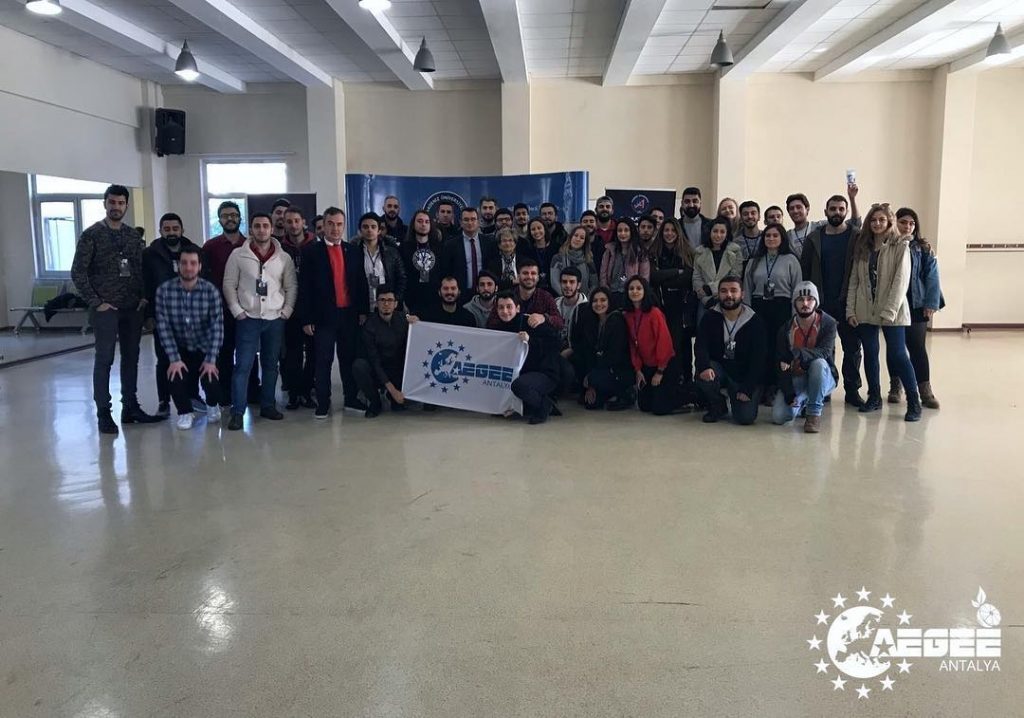
Metin Gurcan, PhD, attended a conference in Antalya on December 7 organized by the European Citizenship Working Group of AEGEE Europe, one of the biggest interdisciplinary association across Europe gathering 13.000 members on 40 countries. The objective of the conference was to understand how and if young people are suffering from mobility barriers in Europe.

Concentrating on the security-mobility-privacy trilemma, Metin Gurcan delivered a talk at the conference elucidating the diverse experiences of mobility and the multiple vulnerabilities experienced by individuals that intersect with, and sometimes challenge, national security domains.

Indeed, developing and maintaining the European Union as an area of freedom, security and unrestricted mobility is a fundamental objective of the EU and is at the heart of EU citizens’ interests. In order to achieve this objective, one of the key challenges member states must overcome is the development of a coherent approach to safeguarding and promoting security, mobility and privacy within the EU. In many occasions however the simultaneous fulfillment of these three aims seems unachievable; and security, mobility and privacy are instead presented as mutually exclusive or antagonistic pursuits. In fact, the reality is rather more nuanced, and steps taken to improve specifically security, mobility or privacy can often also provide potential to leverage improvements in other areas. The key political question is whether and how the relationship between these concepts is likely to change over the coming years; and how national governments and the EU seek to communicate and explain such change.

To better understand the visa restrictions and limitations over mobility, Gurcan then underlined the changing nature of security. Security as a concept in our region has widened to an extent that even domains such as information technologies, cyber domain, traveling and transportation, money transfers, criminal issues like transnational smuggling, organized crime, human trafficking, and refugee crisis, pandemics, mass migrations, and natural disasters like droughts and earthquakes are defined within the concept of security and to a certain extent all these militarized. Security has also deepened in a sense that traditional state-centric understanding has got blurred and we are talking about human and global security as well. Finding a golden balance and harmony among these three seems hardly possible.

He then underlined that it is not always easy to define what we mean by security, mobility. Essentially, mobility here refers to the ease with which individuals can move across national boundaries for legitimate purposes; security means the safeguards in place to protect Member States; people and property; and privacy is defined in Article 8 of the European Convention on Human Rights (ECHR) as the respect for private and family life, home and correspondence. It is easy to understand why these concepts are often viewed as antagonistic: indeed, some elements appear explicitly to incorporate “trade-offs”. For example, Article 8 EU Court of Human rights acknowledges restrictions to privacy are necessary in the interests of national security and public safety, to prevent disorder or crime, or to protect the rights and freedoms of others. Furthermore, a common response to improving security in an increasingly mobile society is to require personal data from travellers in advance of their journeys and to strengthen borders and reduce crossing points, potentially impacting upon both privacy and mobility.